


Middle School
Grades 7 and 8
Erdkinder: Montessori for Adolescence
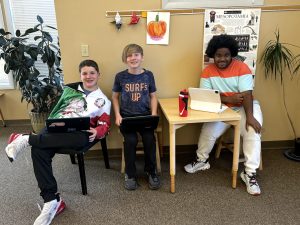
Maria Montessori envisioned a distinctive approach for adolescents, known as Erdkinder (“children of the earth”), recognizing this developmental stage as a time of rapid growth, identity formation, and a deep need for belonging and purpose. Rooted in meaningful work, real-world learning, and growing independence, Erdkinder environments help young people understand their place in the world and their ability to make an impact.
At Thacher, our Middle School program brings these principles to life through rigorous academics, hands-on experiences, community engagement, and leadership opportunities. It also aims to align with the Massachusetts State Curriculum Frameworks in key subject areas. Students are guided to think critically, collaborate thoughtfully, and take increasing responsibility for their learning as they prepare with confidence for high school and the world ahead.
Montessori Pedagogy for the Adolescent:
- Holistic Education: Montessori’s adolescent pedagogy emphasizes a holistic approach to education. This means not only focusing on academic skills but also on social, emotional, and life skills. Middle school students are encouraged to explore their interests, develop independence, and understand their role in the community.
- Real-World Learning: through extended learning experiences beyond the classroom, including work on farms and in businesses, students develop practical skills, gain an appreciation for meaningful work, and see how their learning applies in the real world.
- Community and Collaboration: Our environment promotes collaboration and community building. Students work together on projects, engage in thoughtful discussions, and support one another’s learning. It is a place where every student’s voice is heard and respected, and where conflicts are resolved through community meetings and peer mediation.
- Self-Reflection and Personal Growth: Students are guided to reflect on their learning, their behavior, and their goals. This process helps them develop self-awareness and a deeper understanding of themselves, allowing them to reach their highest intellectual and creative potential.
Classes:
- Algebra I
- Language Arts: Literature, Writing Skills, Socratic Seminar, Social Studies (civics)
- History: United States and World History
- Science
- Practical Life
- Microeconomics/Event Planning: Pizza Business, Yearbook Committee, Outings
- Solo Time
- Valorization Academy (7th)
- Capstone (8th)
Outside Classroom Experiences: Skiing, Community Service, POP (Pedagogy of Place), Erdkinder
Secondary Education Preparation: SSAT/ISEE preparation and thoughtful guidance for students and their families throughout the high-school admissions process.
Portrait of a Thacher Montessori Graduate
Our program is designed to achieve the following goals:
1. Students are life-long learners. Many of our learning activities are individualized. Each child is involved in work that holds particular interest because it is geared to their own pace, repeating a task as often as desired, thus experiencing a series of successful achievements. In this manner, the child acquires a positive attitude toward learning.
2. Students are confident. At Thacher Montessori School, work is planned so that each new step is built on what the child has already mastered, thereby removing the negative experience of frequent failure. Success after success builds up an individual’s inner confidence and provides assurance that learning is possible. These confidence-building experiences, in turn, contribute to the sound emotional development of the adult.
3. Students are independent. At Thacher Montessori School, we give each child the gift of independence. This lets them know we value them and know they are capable. Children grow up feeling empowered and safe in their abilities to make sound choices. When we trust them, they learn to trust themselves and become happy and productive members of their local and global communities.
4. Students are curious. Our learning environment elicits curiosity and safely curates an innate need to learn, expand, and experience the world around them.